Songs › Grateful Dead › Morning Dew
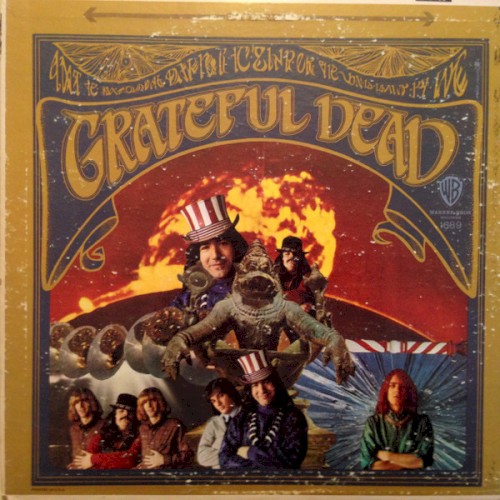
Grateful Dead
Morning Dew
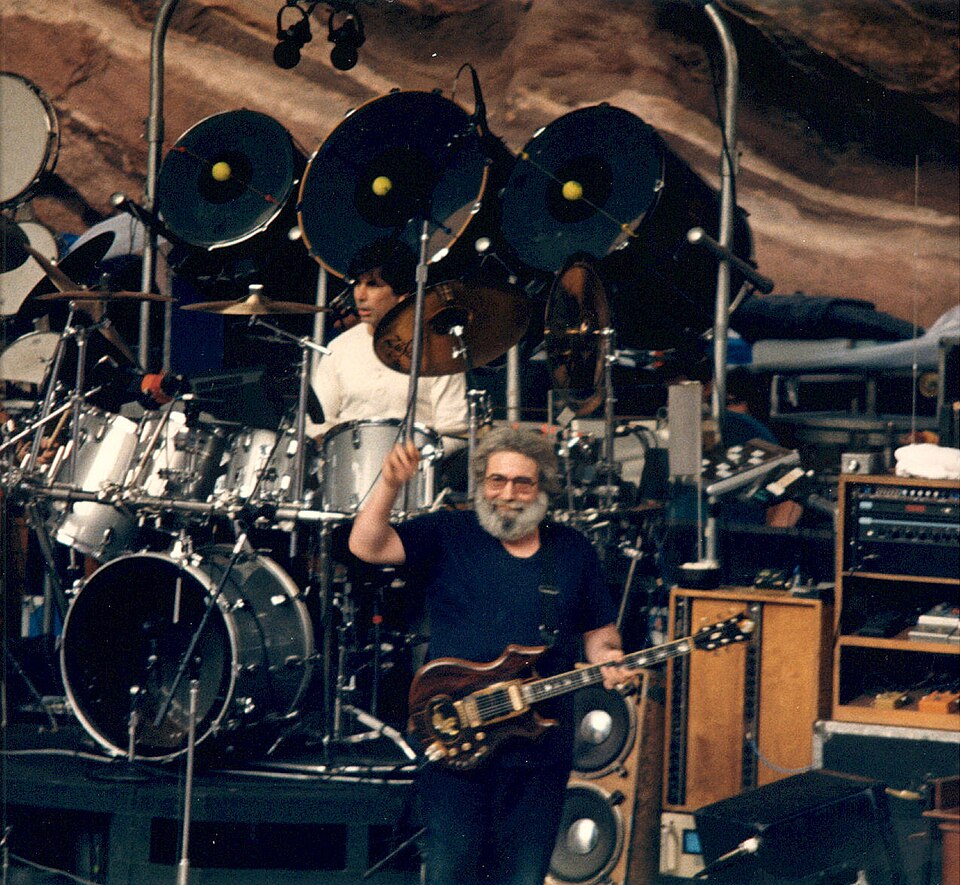
Somebody else wrote it. What the Dead added was the ending.
Hollow marks: the other 49 scored songs · Hatched band: the Crossover Zone
The case
The strongest honest argument for each side, then the ruling.
The Garcia argument
The Dead did not write this song, so the written part is not what makes their version theirs. What they added happens in performance: a closing section that builds from near silence to full volume. The 1967 studio track is five minutes. The Lyceum version of 1972 is 10:35 and the Cornell version of 1977 is 14:17. The difference is the climb, and its pace was decided on the night.
The Lennon argument
It is a strophic folk song with a fixed lyric and melody, and the Dead sang it straight. Garcia's changes to the words became part of a settled text. Even the famous Europe '72 recording was tidied afterwards, with vocals overdubbed in the studio.
The verdict: GLI 46
The song is fully predetermined and the Dead's Morning Dew is mostly the part that is not. Both halves are essential, so it lands at Dead Center. It is a point left of Estimated Prophet because the composition is borrowed and the band's own contribution is all in the playing.
What is fixed
- Lyric and melody
- Verse order
- The final sung line
What is open
- The closing build
- Its length
- How quiet it gets and how loud
Evidence dimensions
Each runs from 0, Garcia, to 100, Lennon. Their weighted composite is 46. The published GLI is 46, the same.
A fixed strophic song followed by a closing section that grows as long as the night allows.
5:00 in 1967. 10:35 in 1972. 14:17 in 1977.
The song was written by someone else. The arc the Dead built on it was found on stage.
A slow climb in dynamics led by the guitar, different in pace each time.
The best-known version is a concert recording with vocals redone in the studio.
Transformational tolerance
Proven twice over: it survived the move from acoustic folk to electric band, and then tripled in length.
Confidence: 88%
Dated recordings at 5:00, 10:35 and 14:17, and a clear record of what the Dead changed from the original.
Keep arguing
Every placement is relative. These are the songs this one was measured against.
GLI neighbours
Numerically closest
 China Cat SunflowerGLI 45
 Don't Let Me DownGLI 47
 I Want You (She's So Heavy)GLI 44
Cross-band twin
Closest song from the other band
Don't Let Me DownGLI 47Two different recordings have been released as this song.Compare the twoEditorial counterpart
Chosen because it argues back
 Twist and ShoutGLI 49
Two covers at Dead Center. Each band's claim on the song is something that happened while playing it.
Compare the twoThe record
- A cover. Bonnie Dobson's original was finger-picked acoustic folk; the Dead rebuilt it as an electric band arrangement.Source ↗
- The closing line "I guess it doesn't matter anyway" appears to be Garcia's own addition.Source ↗
- The Europe '72 version, recorded 26 May 1972 at the Lyceum, runs 10:35. The 1967 studio track runs 5:00.Source ↗
- At Cornell on 8 May 1977 it runs 14:17.Source ↗
- Europe '72 had vocals overdubbed in the studio afterwards.Source ↗
Where the sources disagree
- Performance count: 274 (Wikipedia) or 287 (setlist.fm).
- Tim Rose's co-writing credit is disputed; Dobson wrote the song.