Songs › The Beatles › Tomorrow Never Knows
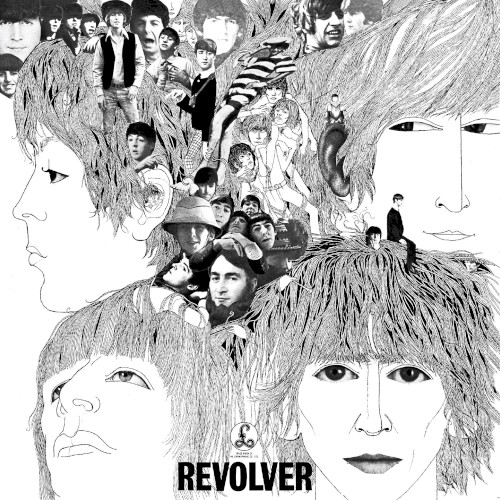
The Beatles
Tomorrow Never Knows
How it was made is nearly Garcia. Where it lives is pure Lennon.
Hollow marks: the other 49 scored songs · Hatched band: the Crossover Zone
The case
The strongest honest argument for each side, then the ruling.
The Garcia argument
Harmonically there is almost nothing to predetermine: one chord over a drone, and a drum pattern. On 7 April 1966 tape loops running on five machines were mixed live at the desk, faders moved by hand in real time. That mix was a performance. Nobody could have repeated it, and nobody wrote it down.
The Lennon argument
The performance happened once, onto tape, and the tape is the work. The loops themselves were prepared beforehand. The vocal treatment through a rotating speaker and the drum sound exist only as recorded. The Beatles never played it live, and it is hard to say what a faithful live version would even consist of.
The verdict: GLI 61
The clearest case in Phase I of the two questions coming apart. How the music was made is close to Garcia. Where the music now lives is pure Lennon. The Index gives more weight to where identity resides, so it sits right of centre, and well short of the fully scored Beatles records because so much of its content emerged at the faders.
What is fixed
- Lyric
- Drone and drum pattern
- The prepared loops
- The finished tape
What is open
- Where each loop entered and left, on the day
Evidence dimensions
Each runs from 0, Garcia, to 100, Lennon. Their weighted composite is 60. The published GLI is 61, 1 higher after comparison with neighbouring songs. The allowed margin is 6.
Verses over a drone with an instrumental break. The form is simple and set.
Inferred. There is one realization, and it is hard to say what a second would consist of.
Split. The lyric, drone and loops were prepared. Where the loops fall was decided at the faders.
A live mix of prepared material: improvisation with fixed objects.
Close to the maximum. The work is the tape.
Transformational tolerance
Very low. Take away the recorded sound and what remains is a lyric over one chord.
Confidence: 70%
The session is well documented. How to weigh a performance that happened once, at a mixing desk, is the open question.
Keep arguing
Every placement is relative. These are the songs this one was measured against.
Cross-band twin
Closest song from the other band
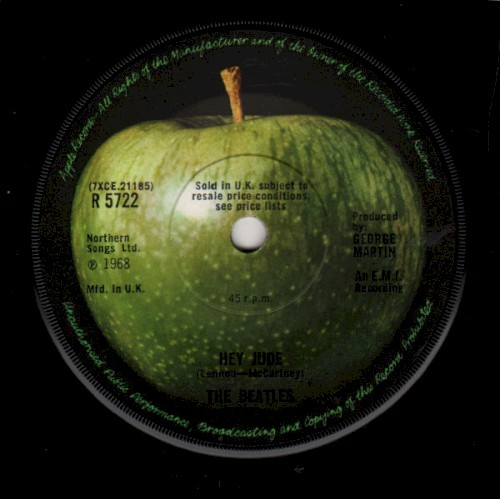
 Sugar MagnoliaGLI 60The band could stop it in the middle and finish it a week later.Compare the two
Editorial counterpart
Chosen because it argues back
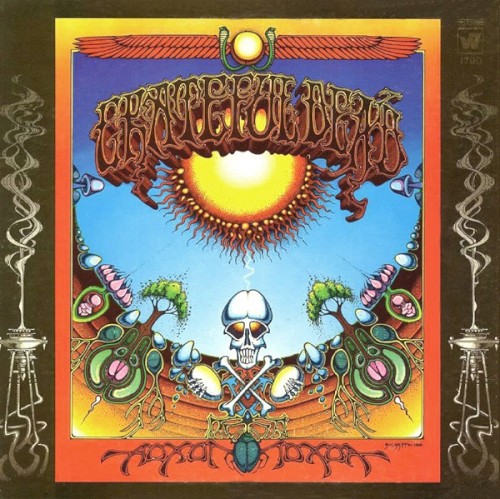
 Dark StarGLI 4
Both sit on one chord. One was played 217 different ways. The other was played once, to tape.
Compare the twoThe record
Catalog facts
- Catalog no.
- GLI·TB·005
- Artist
- The Beatles
- Writers
- Lennon–McCartney
- Release
- Revolver (1966)
- Released
- 5 August 1966
- Duration
- 3:00
Sources
- Wikipedia: Tomorrow Never Knows
- Beatles Bible: Tomorrow Never Knows
- Beatles Bible: 7 April 1966 session
Classified 5 October 2026