Songs › The Beatles › Hey Jude
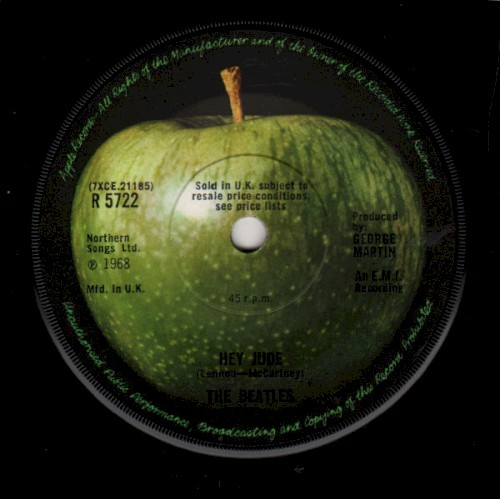
The Beatles
Hey Jude
More than half the record is one chant, and the singer makes up what goes over it.
Hollow marks: the other 49 scored songs · Hatched band: the Crossover Zone
The case
The strongest honest argument for each side, then the ruling.
The Garcia argument
The coda lasts over four minutes of a seven-minute record. It is one phrase repeated while McCartney ad-libs over it until the fade, with a hired orchestra clapping and singing along. The master was the first take at a new studio, begun before the drummer was back at his kit, with an expletive left in. A good deal of the record happened and was allowed to stand.
The Lennon argument
The first three minutes are a carefully written ballad, and the song would be whole if it ended there. The coda's phrase, chords and orchestral build were planned. The length is a fade, which is a mix decision.
The verdict: GLI 64
A written song with an open tail, the shape of Scarlet Begonias in reverse proportions. The repetition is neutral: here it is a designed frame with improvised vocals inside it. Lennon leaning, by less than any Beatles ballad.
What is fixed
- The ballad
- The coda phrase and chords
- The orchestral build
What is open
- The ad-libbed vocal
- In principle, the length
Evidence dimensions
Each runs from 0, Garcia, to 100, Lennon. Their weighted composite is 64. The published GLI is 64, the same.
A fixed song followed by a coda whose length was set by the fade.
Inferred from one master and a television performance sung over it.
The song is fully written. The four-minute coda is a chant with ad-libs.
Composed verses, then accumulation over a repeated figure.
Accidents were kept: a late drummer, a swear word, an orchestra asked to clap.
Transformational tolerance
The song would survive any singer at any piano. The coda depends on who is shouting over it.
Confidence: 82%
Well documented sessions. No concert performance by the Beatles.
Keep arguing
Every placement is relative. These are the songs this one was measured against.
Cross-band twin
Closest song from the other band
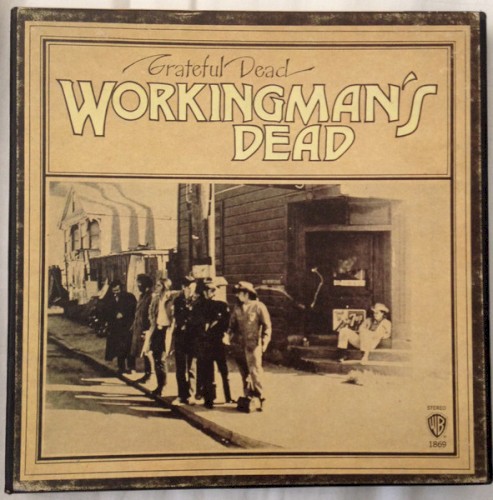 Uncle John's BandGLI 66The harmony is the point, and harmony has to be written.Compare the two
Editorial counterpart
Chosen because it argues back
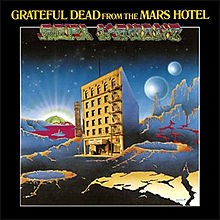 Scarlet BegoniasGLI 38
Each is a finished song with a long open tail. The Beatles faded theirs out. The Dead followed theirs somewhere else.
Compare the twoThe record
- After two nights of rehearsal takes at EMI, four takes were recorded at Trident on 31 July 1968. The first became the master.Source ↗
- The coda lasts over four minutes of the 7:12 track, and McCartney ad-libs through it until the fade.Source ↗
- A 36-piece orchestra was overdubbed the next day. The players were asked, for a double fee, to clap and sing along.Source ↗
- McCartney started the master take without realising Starr was out of the room. Starr got back to the kit in time for his entry.Source ↗
- An expletive at about 2:58 was left in the finished mix.Source ↗
Where the sources disagree
- Accounts differ on who swore.
- Running time is given as 7:12 and 7:11.
Catalog facts
- Catalog no.
- GLI·TB·016
- Artist
- The Beatles
- Writers
- Lennon–McCartney
- Release
- Hey Jude / Revolution (1968)
- Released
- 30 August 1968
- Duration
- 7:12
Sources
Classified 5 October 2026