Songs › The Beatles › A Day in the Life
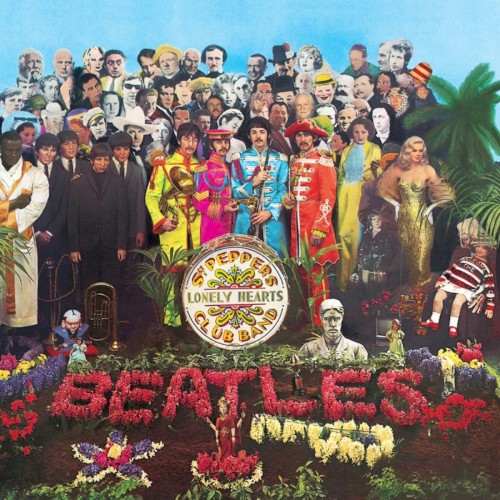
The Beatles
A Day in the Life
A built object with one pocket of controlled chance.
Hollow marks: the other 49 scored songs · Hatched band: the Crossover Zone
The case
The strongest honest argument for each side, then the ruling.
The Garcia argument
The most famous passage in it was not composed note by note. For the 24-bar orchestral climb, George Martin gave forty players a lowest note, a highest note and rough waypoints, and left each of them to find a route. What you hear is an event that happened in the room.
The Lennon argument
Every other element is fixed: two separately written songs joined by a planned bridge, an alarm clock, a counted 24 bars and a final E major chord struck on three pianos and held for over forty seconds. Even the indeterminate passage was commissioned and bounded to the bar. The piece cannot be separated from its recording.
The verdict: GLI 87
A constructed studio object that contains one pocket of controlled chance. The pocket is why it sits below Strawberry Fields Forever and Eleanor Rigby. The container around it is why it is still deep in Lennon territory.
What is fixed
- Both song sections
- The 24-bar bridges
- The final chord
- The edit
What is open
- Each orchestral player's route through the climb
Evidence dimensions
Each runs from 0, Garcia, to 100, Lennon. Their weighted composite is 86. The published GLI is 87, 1 higher after comparison with neighbouring songs. The allowed margin is 6.
Two songs joined by a counted 24 bars, twice. Every boundary is planned.
Inferred from the construction. There is nothing here a second performance could vary without loss.
High, with one deliberate exception: forty players choosing their own way up.
Assembly. Sections were written separately and bridged.
The final chord, the orchestral climb and the edits are properties of the tape.
Transformational tolerance
Low. It can be arranged for other forces, but the result is a tribute to the record.
Confidence: 86%
Thoroughly documented sessions. No live performance by the Beatles.
Keep arguing
Every placement is relative. These are the songs this one was measured against.
Cross-band twin
Closest song from the other band
 Attics of My LifeGLI 88The most Lennon song the Dead played, and a choir could sing it.Compare the two
Editorial counterpart
Chosen because it argues back
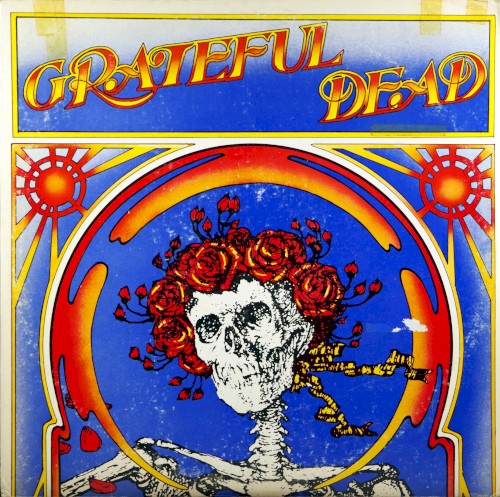 Playing in the BandGLI 18
Both cut an open hole in a composed song. The Dead's hole could last forty minutes and was different every night.
Compare the twoThe record
Catalog facts
- Catalog no.
- GLI·TB·006
- Artist
- The Beatles
- Writers
- Lennon–McCartney
- Release
- Sgt. Pepper's Lonely Hearts Club Band (1967)
- Released
- 26 May 1967
- Duration
- 5:35
Sources
Classified 5 October 2026