Songs › Grateful Dead › Casey Jones
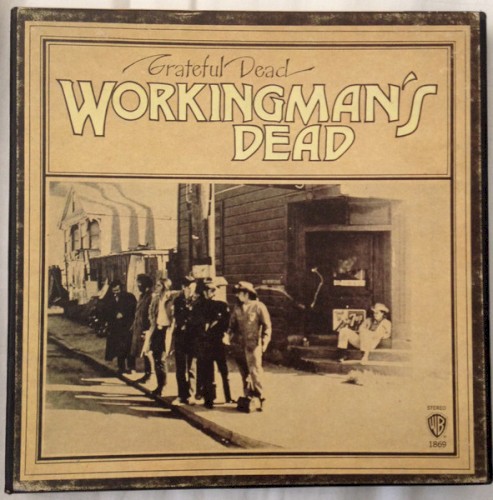
Grateful Dead
Casey Jones
It started with a long jam. The band took the jam out.
Hollow marks: the other 49 scored songs · Hatched band: the Crossover Zone
The case
The strongest honest argument for each side, then the ruling.
The Garcia argument
The earliest versions in 1969 were slow and loose, with a long instrumental stretch. The song is built on a shuffle that depends on feel, and its ending speeds up like a train gathering pace.
The Lennon argument
Within about six months the band had turned it into the tight song on the album, which means they removed the open part on purpose. The acceleration at the end is a written effect. Garcia described a studio delay on the vocal chosen to sound mechanical. From then on it was played to plan.
The verdict: GLI 73
A song that moved toward Lennon during its own lifetime. The band tried the open version and chose the fixed one. It ranks above Friend of the Devil because it was varied less afterwards, and below the American Beauty ballads because it still runs on a band shuffle.
What is fixed
- Lyric and tune
- Verse and chorus order
- The accelerating ending
What is open
- Feel of the shuffle
- How hard the ending is pushed
Evidence dimensions
Each runs from 0, Garcia, to 100, Lennon. Their weighted composite is 73. The published GLI is 73, the same.
Verse and chorus in order, ending in a planned acceleration.
Once it settled in 1970 it was played close to the record.
Lyric, tune and the speeding-up ending are all written.
Composed. The band tightened it and removed the jam it started with.
The record has a deliberate vocal delay effect that is part of how it sounds.
Transformational tolerance
Moderate. It was looser in 1969, and the band chose the tight version.
Confidence: 78%
No DeadBase count was found, and the account of the early slow versions rests on one fan site.
Keep arguing
Every placement is relative. These are the songs this one was measured against.
GLI neighbours
Numerically closest
 Help on the WayGLI 74
 While My Guitar Gently WeepsGLI 71
 Come TogetherGLI 75
Cross-band twin
Closest song from the other band
While My Guitar Gently WeepsGLI 71The lead guitar that defines the record was played by a guest.Compare the twoEditorial counterpart
Chosen because it argues back
 Get BackGLI 41
Both began as loose jams in 1969. The Dead tightened theirs within months. The Beatles played theirs on a roof.
Compare the twoThe record
- Garcia described a deliberate studio effect on the record: a split-second delay on the vocal, chosen to sound mechanical.Source ↗
- Workingman's Dead was made in about nine days, with layered vocal harmonies new to the band.Source ↗
- The earliest 1969 versions were slow with a long instrumental section; within about six months it had become the tight song on the album.Source ↗
- A regular number through 1974, rare afterwards, last played in March 1993.Source ↗
Where the sources disagree
- Performance count: 328 (setlist.fm) or 311 (a fan site). No DeadBase figure found.
- The account of the slow 1969 versions rests on one fan site.
Catalog facts
- Catalog no.
- GLI·GD·012
- Artist
- Grateful Dead
- Writers
- Jerry Garcia / Robert Hunter
- Release
- Workingman's Dead (1970)
- Released
- 14 June 1970
- Duration
- 4:24
- Performed
- 328 times (setlist.fm)
- First played
- 20 June 1969
- Last played
- 27 March 1993
Sources
- Wikipedia: Casey Jones (Grateful Dead song)
- dead.net: Greatest Stories Ever Told, Casey Jones
- deaddisc: Casey Jones
- Wikipedia: Workingman's Dead
Classified 5 October 2026