Songs › The Beatles › Come Together
The Beatles
Come Together
It arrived fast and perky. The record is what happened after someone said to slow it down.
Hollow marks: the other 49 scored songs · Hatched band: the Crossover Zone
The case
The strongest honest argument for each side, then the ruling.
The Garcia argument
The song came in sounding like a Chuck Berry number, and the record's whole character came from a suggestion in the studio to slow it down and play it swampy. The basic track was cut live. Lennon played the song on stage with a different band in 1972, and it held.
The Lennon argument
After the live basic track came nine days of overdubs: a new lead vocal with tape delay, electric piano, guitars, harmonies. The whispered word that opens each bar, half masked in the mix, is a studio effect. The arrangement on the record is the one everyone means by the title.
The verdict: GLI 75
A written song with an arrangement discovered in the room and then fixed in detail. The discovery happened once, before the tape that matters. Lennon leaning, at about the level of Touch of Grey.
What is fixed
- Lyric
- The bass and drum figure
- The vocal treatment
- Overdubbed parts
What is open
- The feel of the basic track
Evidence dimensions
Each runs from 0, Garcia, to 100, Lennon. Their weighted composite is 74. The published GLI is 75, 1 higher after comparison with neighbouring songs. The allowed margin is 6.
Verse and refrain in a fixed order with a set solo.
Inferred from eight takes. Lennon later played it with another band.
The song was written fast. The arrangement was decided in the studio.
A groove found by slowing the song down, then built up by overdub.
The delayed vocal, the half-heard whisper and the drum sound are properties of the record.
Transformational tolerance
The song has been played by other bands. The sound of this record is harder to carry.
Confidence: 78%
The sessions are well documented. Whether the Beatles ever played it live is not stated in the sources opened.
Keep arguing
Every placement is relative. These are the songs this one was measured against.
Cross-band twin
Closest song from the other band
 Help on the WayGLI 74Three tight written minutes that always open onto a jam.Compare the two
Editorial counterpart
Chosen because it argues back
 Shakedown StreetGLI 43
Two grooves designed in the studio. One stayed exactly as built.
Compare the twoThe record
- McCartney said the song arrived perky and close to a Chuck Berry tune, and that he suggested slowing it right down and playing it swampy.Source ↗
- Eight takes of the basic track were cut live on 21 July 1969. Take six was chosen.Source ↗
- Overdubs followed over nine days: a re-recorded lead vocal with tape delay, electric piano, guitars and harmonies.Source ↗
- Lennon later performed it with a different band at Madison Square Garden in 1972.Source ↗
Where the sources disagree
- Sources disagree on who plays the electric piano.
- No source that was opened states whether the Beatles ever played it live.
Catalog facts
- Catalog no.
- GLI·TB·023
- Artist
- The Beatles
- Writers
- Lennon–McCartney
- Release
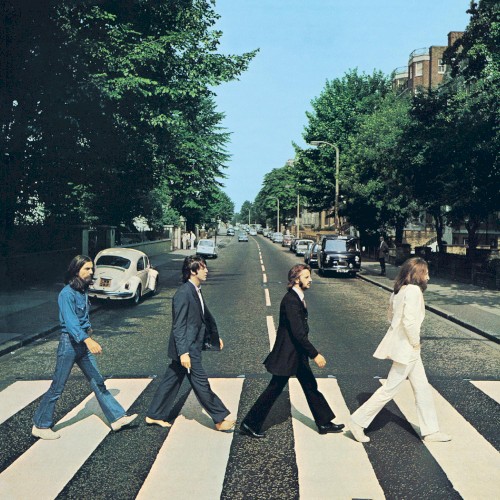
- Abbey Road (1969)
- Released
- 26 September 1969
- Duration
- 4:19
Sources
Classified 5 October 2026