Songs › Grateful Dead › Estimated Prophet
Grateful Dead
Estimated Prophet
Written in seven and assembled from fragments. Then the ending was left open.
Hollow marks: the other 49 scored songs · Hatched band: the Crossover Zone
The case
The strongest honest argument for each side, then the ruling.
The Garcia argument
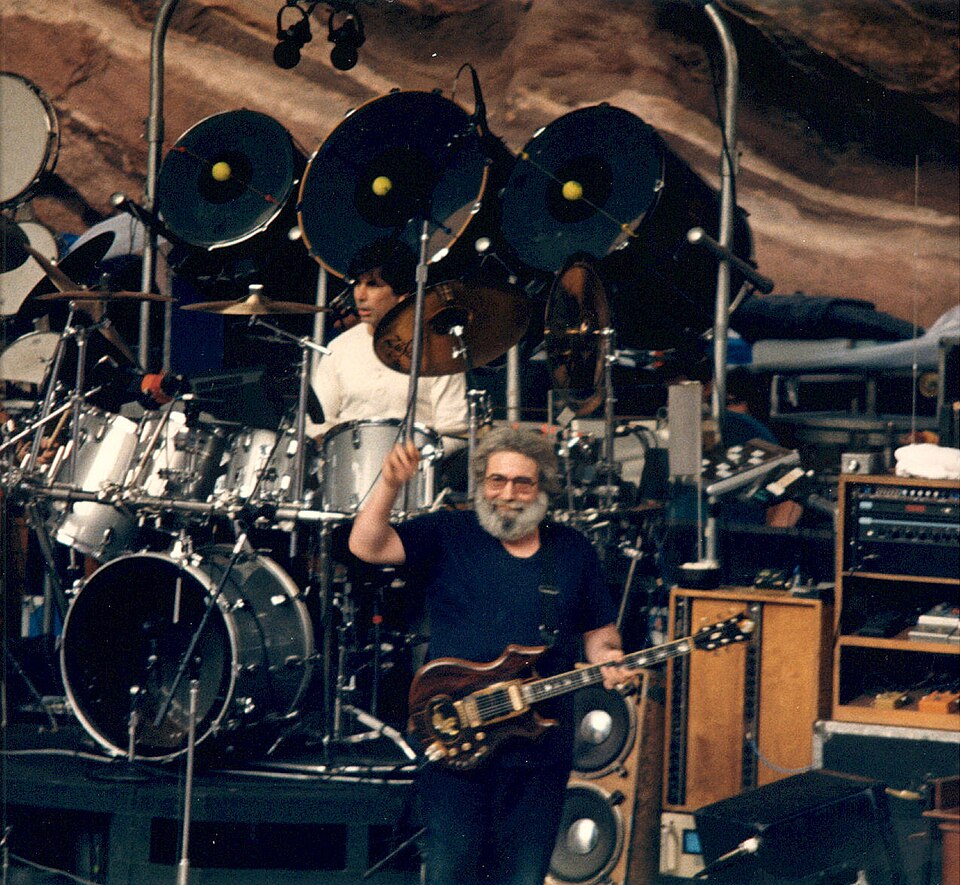
It reached the stage five months before the album. Live it ran well past the studio length and usually led into another song, often Eyes of the World. The drummer says the piece did not work until he found a half-time feel across two bars, which is a discovery made by playing. The studio saxophone and stacked vocals never appeared on stage.
The Lennon argument
Weir built it from several written fragments, all in seven. An odd metre has to be composed and rehearsed, and the sections, the lyric and the vocal lines are fixed. The first two thirds of any performance could be transcribed from any other.
The verdict: GLI 48
A demanding written song with an open tail. The composition is stricter than Truckin's, and the improvised section is more exposed. It sits at Dead Center, a little to the Garcia side because the record's defining colours were dropped and the ending became the event.
What is fixed
- The metre
- Verse and chorus sections
- Lyric
What is open
- The closing jam
- Where it leads
- The feel the drummers put under it
Evidence dimensions
Each runs from 0, Garcia, to 100, Lennon. Their weighted composite is 48. The published GLI is 48, the same.
A composed song in seven, then an outro with no set length.
5:35 on the record against 8:49 at Cornell, and often a bridge into another song.
The metre, the sections and the lyric are written. The ending is not.
Written sections give way to improvisation over an odd-metre vamp.
The record has saxophone and stacked vocals that were never part of the live band.
Transformational tolerance
It lost its studio saxophone and vocal overdubs on stage and gained a jam in their place.
Confidence: 86%
390 documented performances. The growth of the closing jam is described only in a reader comment.
Keep arguing
Every placement is relative. These are the songs this one was measured against.
Cross-band twin
Closest song from the other band
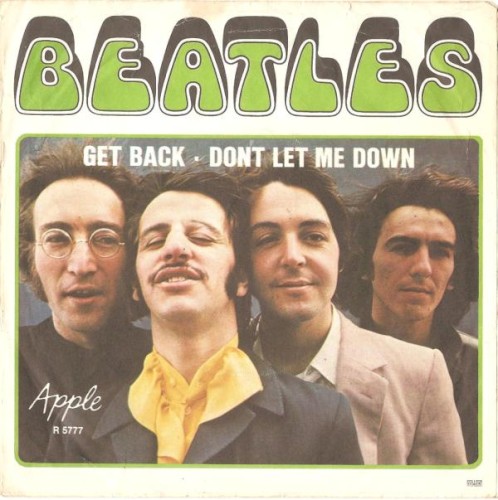 Don't Let Me DownGLI 47Two different recordings have been released as this song.Compare the two
Editorial counterpart
Chosen because it argues back
 Happiness Is a Warm GunGLI 92
Two songs in shifting odd metres. The Beatles needed 70 takes and a splice. The Dead played theirs 390 times.
Compare the twoThe record
- The song is in seven. Kreutzmann says it did not swing until he played a half-time feel across two bars.Source ↗
- The studio track adds Tom Scott on lyricon and saxophone and multitracked vocals, none of which were part of the stage line-up.Source ↗
- It debuted five months before the album and was frequently paired with Eyes of the World.Source ↗
- At Cornell on 8 May 1977 it runs 8:49. The studio track runs 5:35.Source ↗
Where the sources disagree
- The metre is given as 7/4, 7/8 and 14/8 by different sources.
Catalog facts
- Catalog no.
- GLI·GD·022
- Artist
- Grateful Dead
- Writers
- Bob Weir / John Perry Barlow
- Release
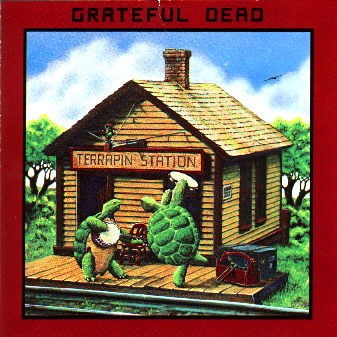
- Terrapin Station (1977)
- Released
- 27 July 1977
- Duration
- 5:35
- Performed
- 390 times (dead.net)
- First played
- 26 February 1977
- Last played
- 28 June 1995
Sources
- Wikipedia: Estimated Prophet
- Wikipedia: Terrapin Station
- dead.net: Greatest Stories Ever Told, Estimated Prophet
Classified 5 October 2026